

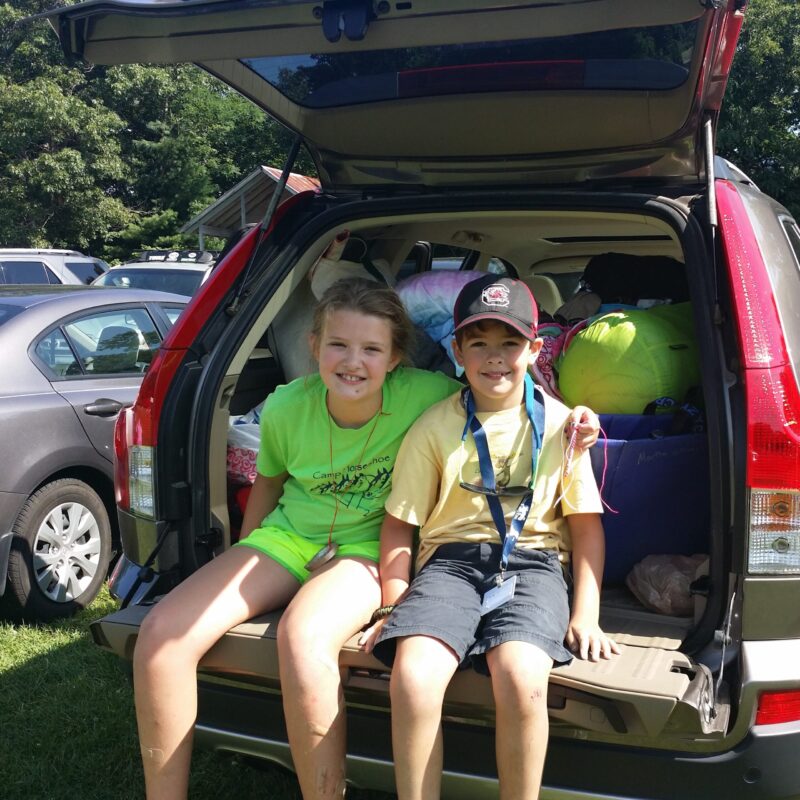
I love sleep-away summer camp. I loved it as a kid, and I have loved it for my kids. There is something magical about being outdoors with a tribe of kids, led by a tribe of older kids, participating in traditions and singing and chanting as loud as you can. Sure, there are bug bites, skinned knees, and homesickness, and your checking account may take a hit, but the benefits of a camp experience far outweigh any annoyances or expenses.

Throwback: Bett’s kids at summer camp.
I have two seasoned camp kids – one boy and one girl – both now almost grown and flown. Camp has been a central part of our summers. Both wrote about their camp experiences in their college essays. This is our first summer in a decade and a half without a kid at camp, either as a camper or a counselor. It is a little bittersweet.
Safety First
Before you fall in love with a camp’s Instagram feed or your child’s enthusiasm for its waterslide, take a moment to look behind the scenes. One of the most meaningful marks of approval a camp can have is accreditation from the American Camp Association (ACA). The ACA holds its member camps to more than 300 standards covering everything from staff training and emergency procedures to health services, facility maintenance, and camper-to-staff supervision ratios.
Camps work hard to earn and maintain their ACA accreditation through rigorous on-site reviews conducted by trained visitors. ACA-accredited camps have made a documented, verified commitment to your child’s physical and emotional well-being. While it won’t guarantee that no one will scrape a knee or get a little homesick, it does mean the people in charge have been held to a professional standard. That peace of mind is worth a lot when you’re leaving your most precious cargo in their care.
Opening the door to independence
When you leave your kids in their cabin, they become the masters of their universe. They are the ones who will keep their clothes, shoes, wet bathing suits, and towels in order, or not. If sand gets into their sleeping bags, they will either have a gritty night’s sleep or figure out how to shake it out. We help them solve these little problems at home, but they must figure them out for themselves at camp. The best we can do is remind them to brush their teeth in our letters and emails.
Learning by doing
Summer camp equips kids with a treasure trove of practical skills to build on. From teamwork and communication to problem-solving and leadership, camp offers lessons far beyond the classroom and the comforts of home. They may work together to build a fort or collaborate on a scavenger hunt. They may comfort a homesick camper or offer their towel to someone who forgot theirs and is shivering after a dip in the cold mountain pond. Children emerge from camp armed with experiences that help them grow.
Unplugged adventure
In today’s digital age, where screens reign supreme, summer camp offers a refreshing escape into nature. It’s a chance for children to unplug from technology and reconnect with the world around them. Whether navigating forest trails, paddling across tranquil lakes, or gazing at star-studded skies, camp provides an immersive experience that fosters a deep connection with the natural world.
Cultivating confidence
Being away from your family for a week (or more!) can be hard and even scary when (not if) they start to miss home. Trying new things, making new friends, and even trying new food can be uncomfortable and disconcerting. However, those experiences help kids grow and learn that they can do hard things. They might also learn to be a little more adventurous. (Both of my kids came home from summer camp liking food they had previously sworn they did not like.) When they conquer those fears and situations, you are helping them build their blueprint for future new and scary things.
Fostering creativity and imagination
From arts and crafts to theatrical performances, camp encourages children to use their imaginations, explore their passions, and express themselves. Unencumbered by the school grading system in art or theater class, children find joy and confidence that show in their camp creations and in conversations on the ride home. The tie-dyed T-shirts are worn until they no longer fit, and hand-painted rocks become childhood treasures that remind us of happy camp days.
Making new friends
A unique alchemy happens when you gather a diverse group of people, place them in a shared environment, and sprinkle in a dash of adventure. Campfires become confessional circles, bunk beds transform into storytelling stages, and shared activities forge bonds. Some camp friendships last a lifetime, especially when kids return to the same camp year after year. Summer camp isn’t just about making friends; it’s about learning how to make them and understanding that lasting friendships are rooted in shared experiences, camaraderie and mutual respect.
Giving yourself a break
While we love our kids, taking a break from them is also good. You have a chance to have your own adventure while they are gone. Spend more time with other children in your home, read a good book, see an old friend, go to the movies, or have a date night. The time will pass quickly; you can write letters and stalk them in the camp photo galleries. The reunion is also so very sweet. Those hugs at the end of the week are the best – you don’t even mind how bad their feet smell or how dirty their clothes may be.
As parents, our job is to help our kids grow and learn, keep them safe, and prepare them to be good citizens. The camp experience lets them practice the values you have been teaching. Be kind. Be a good friend. Try new things. Believe in yourself. Fly high, knowing you can always come home to roost.
Bett Williams is chief communications officer for Children’s Trust of South Carolina. She is a proud alumna of Camp Burgiss Glen, a former YWCA camp near Cedar Mountain, North Carolina.