
“It sounds like Gramps owes you an apology. Have you ever told him how you feel?” my 5-year-old, Ay, said to me.
I was taken aback. “Yeah, I guess you’re right. But I don’t think he’d care. I’ve never even thought about telling him.”
“Let’s call him right now!” she demanded.
I was even more shocked. And a little panicky. “No, we’re not calling Gramps right now. Maybe sometime, but not right now,” I said, reaching for my phone before Ay could grab it and FaceTime my dad.
Twenty minutes earlier, we’d walked through the door into our messy house after a long day at work and school. I was immediately triggered, dodging the toys on the living room floor.
“Could you pick up your stuff once in your life?” I yelled. “I’m tired of doing it all—all the time!”
Her face fell. I doubled down.
“Just once! I’m so tired. Please pick something up!”
She ran to her bedroom and slammed the door. I flopped on the couch and dropped my head in my hands. I did it again, I thought. I paused. Breathed. Let myself be overwhelmed. Breathed. My body settled after a few minutes.
I got up and knocked on her door.
“Hey, baby. Can I come in?”
“No!”
“Ok, I’ll be right out here,” I said. “I want to apologize.”
She cracked open the door. I could tell she was about to cry. I scooped her up and she broke down, tears and snot soaking my shoulder.
“You hurt my feelings. I didn’t mean to leave my toys everywhere. I’m just a kid,” she sobbed.
I walked slowly back over to the couch and held her in my lap.
“I know. I’m so sorry I did that. I yelled at you and blamed you for things being messy. That was not fair. It was probably really startling, huh?”
I listened as she told me how scared she was. I held her until I could feel her body settle. Then I said something I usually don’t do.
“When I was little, Gramps would get really mad when our house was messy,” I said. “He expected us kids to clean it, and if we didn’t, he would yell and sometimes throw things.”
She looked at me with wide eyes.
“And even though I’m an adult now, I still feel like something bad is going to happen when the house gets messy. I’m trying very hard to not take my stress out on you. I know how scary it is, and I know that it’s not your responsibility to keep the house clean.”
I’d been extra stressed, and yelling and apologizing more than usual, so I thought I’d give her a little bit of context to, fingees crossed, help her not internalize my anger as a reflection of her worth.
“Well, it sounds like Gramps owes you an apology,” she said. “Have you ever told him how you feel?”
I hadn’t.
Acknowledging What I Never Got
Growing up, my dad and I were not close. I loved him, of course, and he often told me he loved me. He taught me how to swing a tennis racket and drive a car. He gave me my childhood nickname, “Cub.” Some of the things I love most about life and myself, I got from him: My sensitivity, love for music, books, photography and cats. He’s honestly one of the most interesting and funniest people I’ve ever met.
But I don’t remember him ever apologizing or holding space for my feelings as a kid. I saw him do horrific things to my older siblings and mom without accountability or care. He did not know me, and I didn’t know him. Every day he came home from work, my body went into high alert until he left for work again. He felt like the biggest threat in my life until I was 16, when my mom divorced him.
Since becoming an adult, he and I have had some reparative experiences. Maybe the most meaningful of which was when he got a U-Haul and drove 14 hours to help me move out of my abusive ex’s apartment. I was eight months postpartum, determined to give my daughter a different blueprint for love and relationships. Having his support in that moment was healing. And now, I can pretty much always count on him to answer the phone whenever I call, send me $50 in a moment of need or offer to change my oil every few months.
But we’ve never talked about what he did and did not do when I was growing up. I’ve worked on it plenty in therapy, but imagining the possibility of sharing and being dismissed made me doubt the pain would be worth it.
My daughter didn’t know any of this, though. She just knew that I do my best to repair and reconnect after I hurt her, so it’d only make sense that my dad would do the same.
And she didn’t let it go. Every few months, she would ask me when I was going to talk with Gramps. I was a little annoyed but also so curious. She was right. I did deserve an apology, regardless of whether my dad could give it to me.
Ultimately, I wanted Ay to see me stand up for myself. I wanted my younger self to see that, too.
When I Told My Dad He Hurt Me
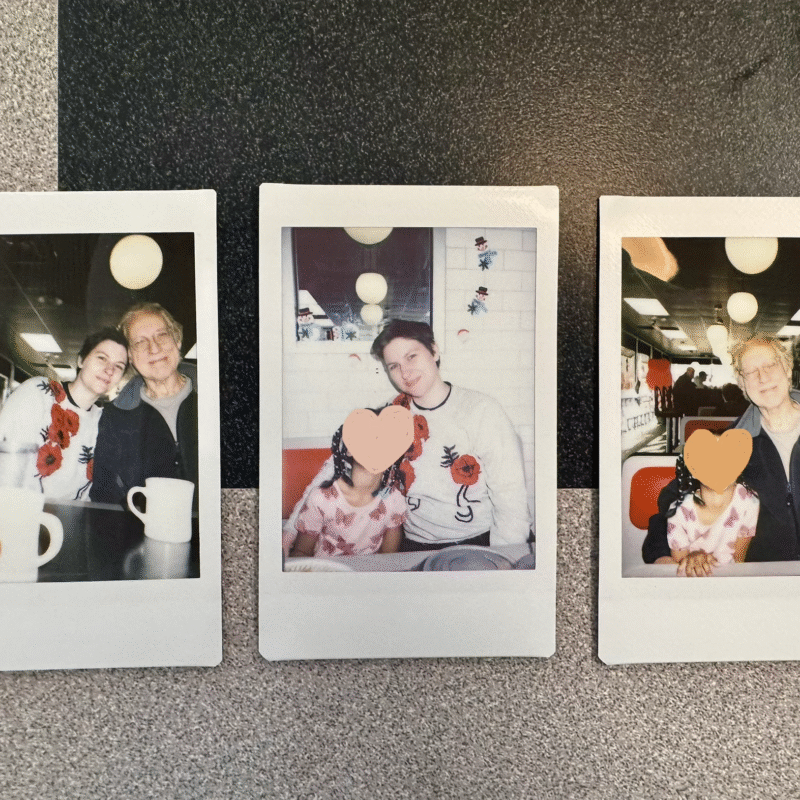
The time came when we went home during Christmas break to Northeast Tennessee, where I grew up. My dad met us there to spend time and work on my car. We got breakfast at Waffle House, and then we went to a nearby playground for Ay to get some energy out.
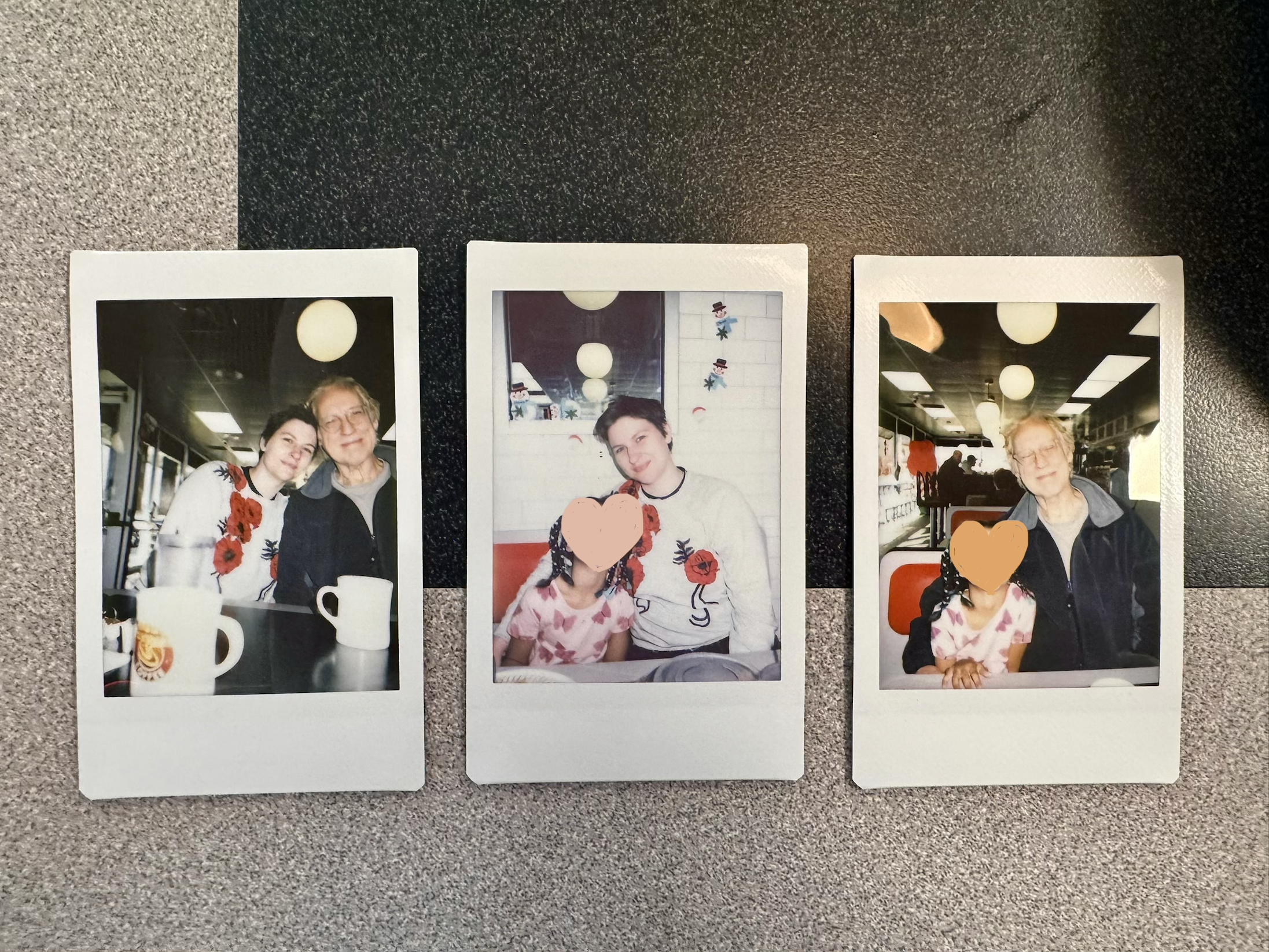
Kara, Gramps and Ay at Waffle House in Northeast Tennessee.
After a while, Dad stepped away to the restroom, and Ay came over to me.
“Bend down,” she said, grabbing my jacket collar in her fist. She looked me in the eyes and said with a stern voice, “Now is the time to tell Gramps how you feel.” She smiled mischievously. “Understand?”
I laughed at her forcefulness and agreed, even though a part of me was shaking inside.
We got in the car together, and I told Dad the story from several months before. I said it felt vulnerable to tell him how I felt, but that Ay had encouraged me to be honest, and I thought that was wise.
I looked in the rearview mirror to find her grinning and nodding with two thumbs up in her booster seat.
Dad said, “Well, Ay, you’re not wrong. I did many things I regret.” He continued talking about how he worked too much and was sleep-deprived and would do a lot of things differently if he could.
Not the worst boomer parent apology, I thought to myself. But I said, “I guess your dad never apologized to you, huh?”
“I never expected him to!” He rattled off reasons why his dad was a good man: He was a faithful Christian who prayed every night, a war hero who saved his troop from Nazis and a loyal father who provided for his wife and seven kids.
I was struck again. He didn’t expect his dad to repair with him, any more than I did.
There’s Grief in Breaking Cycles
On the other side of realizing my dad owed me an apology was the grief of never having an emotionally open, safe and playful relationship with him. That has been heartbreaking to acknowledge.
The conversation in the car felt anticlimactic because what I really wanted him to say was, “I’m sorry I hurt you, Kara. You never deserved any of it. That was my pain, not because of anything you did. You needed me, and I let you down. I lost out on your childhood. I’m here now, and I’m willing to listen. Would you like a hug?”
He did not say any of that. I don’t know if he ever will.
Afterward, I asked Ay why she wanted me to talk with him so badly.
“I wanted Gramps to apologize so you’d be at peace,” she said. Then she added, “So you’d clean the house and quit yelling at me.”
I laughed. “I don’t think it’s that easy, unfortunately,” I said. “But I’ll keep working on it.”
I knew peace wouldn’t come from finally getting the apology I deserved. It came from no longer carrying the grief by myself. It came from sharing my feelings with people who listened to me tell this story (and many others) and held me close as I cried.
The cycle I’m most proud of breaking is the belief that pain has to be carried alone.
From Trauma to Connection
The other day, we got home from a long day at work and school, and Ay asked if I wanted to have a “water day.” She picked up the hose as I laughed and declined the offer. She looked at me, I looked at her, and she sprayed me right in the chest.
I gasped dramatically. And snatched the hose from her and sprayed her back. We proceeded to play for 30 minutes in our sunny front yard. We took turns chasing and spraying.
After a few minutes, she asked, “Would you ever have sprayed your parents?”
“Definitely not,” I chuckled. “If you ever have kids, would you let them spray you?”
“Definitely.”
She answered without hesitation. Evidence of a different blueprint for love than the one I inherited.
Our house is still a mess. I still get overwhelmed. And we keep growing.