

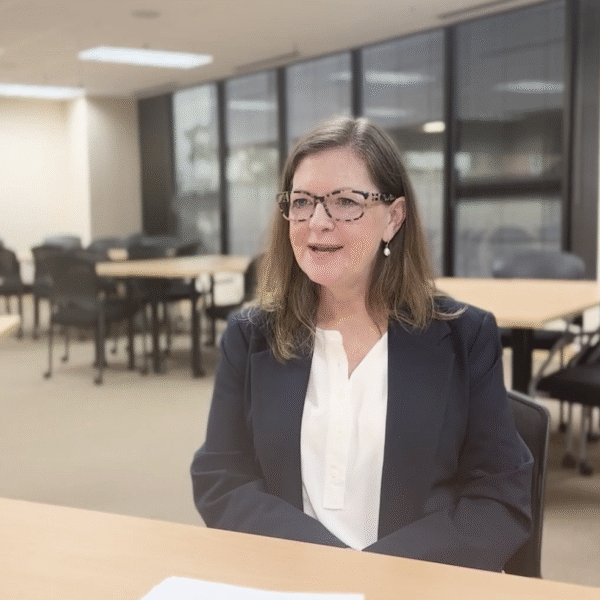
For many parents, child welfare systems can feel distant and complicated. South Carolina’s Department of Children’s Advocacy was created to help bridge that gap, serving as an independent voice to ensure children are safe, heard and receiving appropriate services. That work is now being led by Margaret Fent Bodman, the state’s new child advocate.
Appointed by Gov. Henry McMaster in July 2025, Bodman brings decades of experience in child advocacy to a role that oversees how the state serves its most vulnerable children. The S.C. General Assembly will confirm her at the start of the legislative session in 2026.
We recently sat down with her to discuss pressing issues families face right now—and what she and the South Carolina Department of Children’s Advocacy are doing to help.
What Does the State Child Advocate Do?
Bodman oversees more than 200 staff members across multiple divisions and provides independent oversight of nine child-serving state agencies, including the state Department of Social Services, Department of Juvenile Justice, Department of Disabilities and Special Needs, Department of Mental Health and others.
The department accepts calls and complaints from parents, professionals and community members who have concerns about services a child is receiving.
“Anybody who has concerns about services that a child is receiving from one of those main child-serving state agencies, we can look into it and investigate and then advocate on behalf of that child if it’s warranted in that particular case,” she said.
Why Is the Department Important?
The Department of Children’s Advocacy was created through legislation in 2018 and became operational in 2019. Its mission, Bodman said, is rooted in accountability, advocacy and service.
“When I look at our mission and I look at our vision, I see that it is making sure that our state agencies are operating at a level where our children in our state are getting the quality of the service that they really deserve,” she said.
That includes examining not just whether children receive services, but whether those services are effective.
“Not just that they are accessing the services and getting the services, but they’re also of a quality that is going to be meaningful,” Bodman said.
The Department of Children’s Advocacy also runs key programs, including the Volunteer Guardian ad Litem program, the Foster Care Review Board and the Heart Gallery for adoption.
What Does Advocacy Look Like in Practice?
Many children are involved in multiple systems at once, including juvenile justice, social services, mental health and disability services.
“That’s really how complicated a case could potentially get,” Bodman said. “That child is involved in so many different agencies and has so many different needs.”
The department often plays a coordinating role, ensuring agencies communicate with one another.
“One of the things we can do is try to bring everybody together,” she said. “Has everybody gotten a copy of the assessment? Is everybody up to date on what’s going on?”
Sometimes, she said, advocacy means persistence.
“It is the squeaky wheel,” Bodman said. “It’s making sure that you are the top piece of paper on the stack.”
What Should Parents Know About the Department?
Bodman emphasized that parents can contact the department directly if they have concerns.
“I want parents to know about the Department of Children’s Advocacy that we are also here to help their child,” she said.
That includes parents whose children are in foster care or in the custody of the Department of Juvenile Justice.
“We are looking out for their child’s best interest,” Bodman said. “We want to make sure that their child is getting the services that they need while they’re not at home in their custody.”
What Message Do You Have for Children?
Bodman said many children are unsure who department staff are when they first visit facilities.
“It is incredible once we sit down and explain to them who we are and why we’re there,” she said.
What often matters most to children, she said, is being heard—and believed.
“They appreciate that somebody’s listening to them and hearing them,” Bodman said. “They’re so surprised that we will come back, and we do.”
What Does Child Abuse Prevention Mean?
For Bodman, prevention begins with education and action.
“Child abuse prevention to me means education,” she said. “It means being proactive.”
She stressed that prevention also includes preventing further harm.
“It’s not just prevention of the first act of maltreatment,” Bodman said. “It’s preventing any further harm to children.”
For parents specifically, she emphasized the importance of preparation and effective communication.
“I really believe the two keys for parents in prevention of child abuse and prevention of children coming into any child welfare system is both knowledge and communication,” she said.
What Are the Greatest Needs Facing Children in South Carolina?
Mental health remains the most pressing issue, Bodman said.
“The greatest needs I see for our families and children in South Carolina are mental health services,” she said.
Addressing those needs requires multiple layers of support.
“I think it is direct services. I think it is family support. It is care coordination,” she said.
How Can People Help?
Community members can support children in several ways, including volunteering.
“We’re always looking for volunteer guardians ad litem,” Bodman said.
More broadly, she encouraged people to speak up.
“Everyone can get involved just in terms of being on the lookout for a child that needs support,” she said.
As she steps into the role, Bodman expressed gratitude for the department’s foundation and staff.
“The staff is amazing,” she said. “Their hearts are truly in the work, fighting day in and day out for the children in South Carolina.”
Learn more about the South Carolina Department of Children’s Advocacy.